Full Frame or APS-C Sensor About 6 months ago I was faced with a delemma of which camera to buy. I have always been a canon man and believe through experience that Canon have the slight edge over Nikon for image quality. I initially wanted to buy the Canon 5D which most of my mates own. This really is a great camera with super high end Iso's and excellent tonal ranges. I had seen the results from this camera and definitely agree with my mates the images are hard to beat for a Full frame camera of this price range. After a lot of thought and consideration I come to the conclusion that there are pro's and con's for both the two a camera's but eventually I was swayed towards the 7D for quite a number of factors.
Admittedly the 5D does produce more crisper images and noise is less apparent at high end ISO's but for value for money I think I have made the right choice The 5D is a lovely camera but lacks a lot of the great new features of the 7D. Perhaps we will be seing the 5D Mk 3 soon with all the features included from the 7D I have heard rumors of the new 5D mk 3 is on the way next year. If all the features of the 7D and the 5D are going to be combined plus even better,newer features are going to be added, I will be putting my name down for one tomorrow To summarize the 7D is a great all round camera which is very fast, used more for action and sports photography,brilliant for out door photography but still good for indoor work too The 5D better has better clarity and tonal ranges,with a great big view finder,less noise,perhaps better suited to studio,wedding and Landscape photography Shown below is some of my research that I carried out on these 2 cameras. This research was taken from a web site called Digital Rev |  | ||||||||||||||||||||||||||||||||||||||||||||||||||||||||||||
|

Wednesday, 6 October 2010
Full Frame or APS-C


Sunday, 3 October 2010
Memory cards
The 2 main memory cards that are used for photography nowadays are Compact Flash and Secure Digital. Both cards are very common nowadays and can be bought from most high street camera shops or computer stores.
The advantages of this type of card are, the cards hold vast amounts of storage data and are the Ideal media for storing vast quantity's of photographs.They range in size from a couple of GB to approx 64 GB for top end storage
Photographer's use these cards to store their photos because they are very small and potable and can be easily carried in a shirt pocket. They are very compact and can be sent through the postal service very cheaply because they are very light in weight. They are relatively cheap to buy and top end cards are very efficient at reading and writing data, which allow fast downloads/upload speeds from a camera and uploading to a computer
The type of memory cards that my camera uses are Compact Flash cards and they come in a variety of different types,speeds and price ranges to suit. The faster the read write speed of the card the quicker response time you will get from your camera and computer
There are mainly 3 main manufactures in this field who produce these cards and they are:
Sandisk
Lexar
Kingston
More information on compact flash cards
This link below is a technical link from the encyclopedia Wikipedia and gives loads of information about compact flash cards and their technical data
Although information on Wikepedia is not verified by any organisation it is a free encyclopidia that anyone can add to or edit. I have always found information on this site to relevant and true
____________________________________________________________
Comparison's
I have used all of the cards above and have found there are some distinct advantages of some cards compared to others.These are outlined below
Sandisk
Shown below are some examples of Sandisk's CF and SD cards

The biggest manufacturer of these type of cards. They have a vast range of cards to suit the amature to the professional. They are very well made rugged cards aimed at all levels and branches of photography
At first I used to use a lot of Sandisk cards. There is a large variety of cards on offer from this company. There are cards to suit all types of digital photography. There are really fast cards which have very fast read write speeds, ideal for press photographers who need speed at hand instantaneously.
There are HD(high definition) CF cards designed for photogrphers who use there camera's for video. You can buy top end very fast cards that cater for HD recording nowadays something that all camera manufactures are using now. Read write speeds have to be very high to record and playback HD movies
There are also slower cards made by this company with slower read/ write speeds tailored for the amateur photographer who's not bothered about speed. These cards are a lot cheaper to buy but downloading large raw files from your camera to your pc can take a lot longer and images take a long time to open
However I have found that a lot of these cards from Sandisk have been counterfeited and have actually bought some of these fake goods. They were supplied by Amazon and they are not sure how these counterfitted goods have infiltrated their stocks. I have 2 faulty cards bought from Amazon and both have crashed my camera. I cannot say if these cards are faulty because they are fakes,it's hard to tell. On two occasions I have lost a vast amount of images and I'm very reluctant to use this make of card again
Follow this link below to Sandisk's website. It shows a variety of video's on the correct card to use for your photography and their specifications
___________________________________________________
Lexar
Another large card manufacture of CF and SD cards. In comparison to all the other cards I prefer Lexar cards. I haven't come across any fakes yet. I now tend to use a lot of high end Lexar cards. These cards are very fast and efficient cards and have never let me down. They are competitively priced compared with Sandisk's products and work out a little cheaper for a high quality card. I have moved over to this brand because of all the fakes infiltrating Sandisk's cards
I tend to use the 300x or 400x speed cards which are more than adequote to cater for all my photogrphy needs. In comparison, Sandisk's top of their line pro series cards are the best you can buy way out of my price range

Shown here is one of Lexar's top of the range Cf cards which delivers 90 meg a second download speeds and the technical data taken from their website


Link to Lexar's site
______________________________________________________________
Kingston
The Kingston cards tend to be a lot cheaper cards and haven't got the speeds of the top end cards of Sandisk and Lexar. I have used these cards in the past but now would only use these for geneal use photography as the performance of this type of cards are very slow. They really lack the performance especially for high end HD video shooting or handling very large raw files that most cameras manufactures are producing nowadays
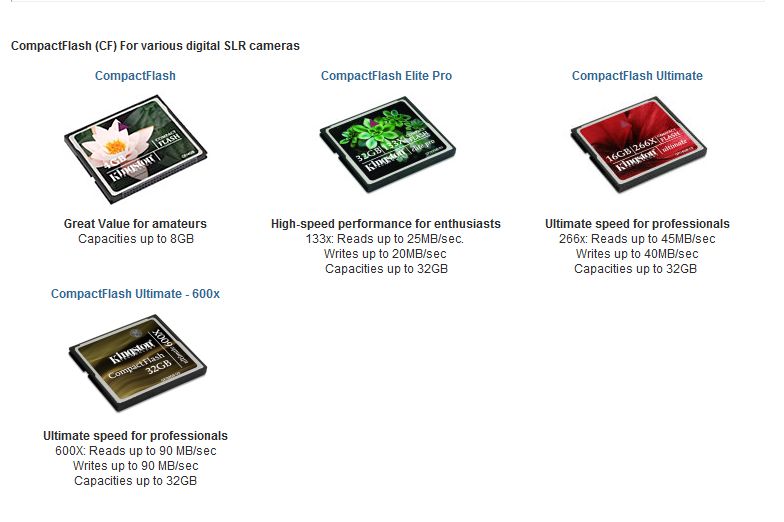
Follow this link to Kingston's page for CF cards
______________________________________________________________
Over all you get what you pay for and I tend to pay the extra for a more efficient faster card. In comparison with all the other makes of CF card, I now choose the high end Lexar cards for my photography. They are very fast, efficient and reliable and also prove very cost effective
Saturday, 2 October 2010
My camera equipment and why I chose it
Shown below is some of my photography equipment that I own and will be using to capture and process my images on this course over the next 16 weeks. Here is a description of my gear and some of the features of the equipment
My Camera’s
Shown below is a list of the camera's that I own. I mainly use my Canon 7d an 18MP 1/60th crop sensor camera. This is a lovely camera with many up to date new features. Some of these include: very fine definition at 18 MP which produces very clear crisp images. It also features a very fast continuous burst rate 8 fp using raw images and a built in electronic leveling guide/mechanism which you view through the rear LCD. I find this a brilant aid,after some playing around with it, no more need for the spirit levels on my tripod now and no more slanting horizons
Canon 7D

Specifications
Specifications
- 18MP APS-C CMOS sensor
- 8 frames per second continuous shooting
- 1080p HD video recording with manual controls
- 3.0 inch Clear View II LCD screen with 920,000 dots
- 19-point AF system (all cross-type)
- 1.0x magnification and 100% coverage viewfinder
- Wireless flash control
- Environmental Sealing
- 18MP APS-C CMOS sensor
A lot of my photography is taken outdoors so environmental sealing was another great feature and reason why I bought this camera
The camera has the usual 3" LCD rear disply on the rear and has gone through some modifications to enhence the brightnesss of the screen when viewing in daylightThis camera has excellent HD recording facilities having 1080p. The clarity of this type of video is outstanding and viewing these video's through an HD tv is excellent. I have taken quite a few video's with this feature and compared to other makes of camera that I have used for video,there is no comparrison
It also features a very usefull function called live view, which enables you to view your photograph before it is taken on the LCD on the rear of the camera. With this feature you actually see exactly how what your photograph will appear after it is shot,which is sometimes not to easy to view throgh the standard viewfinder on the screen what and this is throght the lens
It also features a 19 point auto focus system which makes sure that all of your shots will remain in focus. This feature is customizable with various combinations to suit any photographers needs. This feature is a lot more accurate than most other Canon models and through experience I have found this feature to be very good
Another great feature of this camera is the Lithium -ion battery, it's a LP E6 type which is an improvement from other Canon models. This battery shoots 850 shots with normal use on a sigle charge which I find very usefull. I used to take out 4-5 batteries with me , Now I can cut down the weight of my camera bacg and only take 2 of the camera. I hardly ever have to charge the battery.
This camera has the standard pop-up Canon flash unit which I don't really use. This flash is very harsh and washes out detail when used face on to your subject or very close up. I normally add a flash gun to the hot shoe of the camera or use off flash type flash units mounted away from the camera.
This camera has a built in feature where the main flash can also serve as the remote commander for up to three groups of flashes all controlled by radio,brilliant!
Iso's on this camera are very high ranging from range (100 – 6,400) and is expandable to 12,800. This is fantastic for me as a night photographer enabling me to capture subjects in their natural light.
Canon 400D

- 10.1 megapixel CMOS sensor with improved microlens array, fill factor and lower
- EOS Integrated Cleaning System
- Nine point Auto Focus sensor (same as EOS 30D) with F2.8 support
- Continuous shooting burst up to 27 JPEG and 10 RAW images
- Single large, bright, 2.5" LCD monitor with 160° viewing angles (horizontal and vertical)
I used this camera for years and won some competitions with it. It's a little outdated now and lacks up to date features of it's modern day equivents such as the 50 or 60 D but I did got some lovely results using it. It doesn't matter how many features a camera has at the end of the day a camera is only a box with a hole in it. Its how you use it that matters and it's all about composition,lighting and your imagination
Another cropped sensor lightweight camera at 10MP it can still produce some nice photos and print fine crisp images up to A3 with no problem. The rear LCD screen seems a little dated now having used 32 now over the past couple of years. The controls on this camera are easy to us
Sensor cleaning is also another advanced feature of this camera.Canon has developed an internal Dust Delete Data system, which can map the position of any visible dust on the sensor. This can then be deleted automatically after shooing with the latest Digital Photo Professional software.
The exposure mode dial provides access to the various pre-set scene modes and the manual exposure modes. These include, portrait, landscape, macro, sports, night portrait and fully automatic. Semi auto exposure modes including aperture-priority, shutter-priority and full manual are also located on this dial.
Iso's for this camera range from 100-1600 a little small know compared with my 7 D
The Battery's for this camera are still pretty good and at about 400 shots on a single charge isn't bad
See link below for 400D camera review
This link below takes you to Canon's DSLR camera's range
Fuji F11

My compact point and shoot camera
A great little camera I have used on and off over the past 5 years. Again a lovely point and shoot camera with good resolution. This camera is great to keep in your shirt pocket, I take it with me everywhere. It has an excellent macro producing nearly !:1 ratio images mode and is also excellent for recording video's, surprising for a camera of this age. It takes XD cards which store huge amounts of photos
It is a 6.3 Mp camera with a built in zoom lens with an aperture range of F2.8-F 5.0. The problem with this type of camera is every shot taken is always in total focus from the camera lens to infinity. There is no room at all for creativity with this type of camera,you cannot blur backgrounds or use this camera creatively. This a great little point and shoot camera for everyday photography. At the end of the day it does what is say's on the tin
------------------------------------
My lenses
Canon 17-210 USM F4

This is perhaps my favorite lens. It's clarity and definition of tones it produces is second to none. This is a L series lens, which is canons top of it's range series of lenses. It is made of all metal construction and is weather sealed. It's a very fast lens and stopping down to F4 produces some really nice blurred backgrounds which isolate subjects from there backgrounds. It uses USM motors which are built inside the lens which provide very fast auto focusing in a fraction of a second. This is the difference between lower quality lenses which do not have these motors built into them which make them perform a lot slower
Because my camera using uses a crop sensor, this lens produces a larger focal length than it's maximum zoom of 210 mm stated. The lens will give me giving me a top end range of about 250mm
This lens is fantastic for portraits being able to move in close in to your subjects without them even knowing
This lens was very expensive but I believe in,you get what you pay for. You are paying for top quality lens glass with a precision body. These lenses are used by professionals the world over from studio photographers to press photographers on the move
Canon 17-55 2.8 wide angle zoom
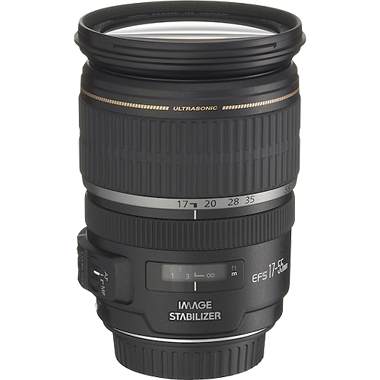
I will be shooting the majority of my landscape images with this lens
To me this lens is really excellent,it,s hardly of my camera. I chose this lens for the clarity of images it produces and it's versatility. With an F stop of 2.8 this is a very fast lens,it is excellent for landscapes having a wide angle of 17mm and it's also great for portraits and general photography. This lens has USM motors in the lens a feature that canon use. These are ultra tiny motors built into the lens which gives very fast auto focusing and very quick reactions,this really important as the killer shot may be missed without this feature
Another feature why I chose this lens is it has IS Image stabilization. This adds a lot of money to the lens but is well worth it. It cuts out camera shake and allows you to to stop down and hand hold your camera in low light situations with slow shutter speeds without very little blur. I bought this lens for about £600 it now retails at £800,for me it's worth it's weight in gold. The reviews said if this lens had a metal body it would have been classed as a "L" series lens
Specifications
| Image size | APS-C |
|---|---|
| 35mm film equivalent focal length (mm) | 27-88 |
| Angle of view (horizontal, vertical, diagonal) | 68° 40' - 23° 20', |
| 48° - 15° 40', | |
| 78° 30' - 27° 50' | |
| Elements/Groups | 19/12 |
| No. of diaphragm blades | 7 |
| Minimum aperture | 22 |
| Closest focussing distance (m) | 0.35 |
| Maximum magnification (x) | 0.17 (at 55mm) |
| Distance information | Yes |
| Image stabilizer | 3-stops |
| AF actuator | Ring USM² |
| Filter diameter (mm) | 77 |
| Max. diameter x length (mm) | 83.5 x 110.6 |
| Weight (g) | 645 |
| Magnification with Extension Tube EF12 II | 0.45-0.231 |
| Magnification with Extension Tube EF25 II | 1.71-0.51 |
| Lens hood | EW-83J |
| Soft case | LP1219 |
Follow the link below for a review of my lens
Tamrom 90mm macro lens

Shown here is my Macro lens which I use to take all of my close up macro shots
I find the performance is decent. The speed of this lens is a little slow compared to my Canon Lenes but the end results are very good producing very crisp clean images
This lens produces a image ratio I:1 which is the equivalent to producing an image the same actual size as the image seen through the viewfinder
I have compared this lens with Canon's 2.8 equivalent and looking at test reports the Canon does have the edge but at the end of the day the Canon is twice the price. I payed £260 for the lens recently, where as the canon is over £500
Specification
- Focal Length 90mm
- Aperture f/2.8 (Actually reads f/3 in use)
- Angle of view 27º
- Filter size 55mm
- Construction 10/9 elements/groups
- Focus type AF/MF
- Closest focus 290mm (1:1)
- Weight 405g
- Dimensions 71.5x97mm
- Mounts available Canon, Nikon (D), Minolta, Pentax (72E).
- Tripod bush No
- Price (SRP) £370
This lens is a lot slower to operate compared with my other other Canon lenses, this is down to the speed of the motors which are built inside the lens. Top end Canon lenses use USM motors which are very fast where as the AF motor's in this type of lens are less superior producing far slower function ability
Brief
My Courses
I have decided to study 3 modules on this course and on completion this will give me a "Diploma in photography and photo imaging". The 3 modules I hope to complete are:
Unit 205 Photo imaging equipment and materials
Unit 310 Photo image output
Unit 312 Working to a photo imaging brief
I have discussed these modules with Steve my tutor and we have decided I will be working to a photo imaging brief on the subject of landscapes, a subject I have never really photographed before, but looking forward to, as this will add another dimension to my photography
The material I will be using for this project will be images I will be capturing over the next couple of months from various locations in and around the country
I am taking a break shortly and visiting the lake district in Cumbria a placewhich I have never visited before.This will be a excellent venue to gather some material for this course. Another place I will be visiting shortly is Whitby gothic festival next month where I want to photograph some street performers and portraits for my second subject of my course. I will hopefully pull in a few landscapes from this area also
Shown below is my camera equipment that I will be using to record all of my images for this course
Canon 7d an 18MP 1/60th crop sensor
Canon 400d 10MP 1/60th crop sensor
Fuji F11 Finepix compact
Canon 70-200 F4 L series Zoom Lens
Canon 17-55 F2.8 L Series Zoom Lens
Subscribe to:
Posts (Atom)